
"colonial merchants"
300 article(s) found

Introduction to Nicaraguan Coffee Flavor Manor with rich aroma, smooth and meticulous taste
Columbus arrived here in 1502 and reached the east coast of Nicaragua. In 1522, Spanish colonists began to conquer the region. The cities of Granada and Leon were founded in 1524. From then on, Nicaragua became a Spanish colony and came under the jurisdiction of the Governor's Office of Guatemala. The city of Leon developed into a political and cultural center; Granada became a commercial and agricultural center. In the later period of colonial rule

History of Coffee cultivation in Taiwan how to develop Coffee planting Technology in Taiwan
Professional coffee knowledge exchange more coffee bean information please follow the coffee workshop (Wechat official account cafe_style) A coffee tree bears fruit several times a year. Coffee is the second largest internationally traded commodity in the world, after oil. Coffee is a very important cash crop in many countries, but in Taiwan, you may have heard the name Gukeng Coffee. Trust you
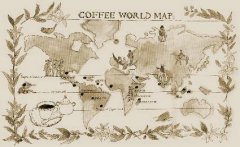
The spread of Coffee Culture
The spread of coffee into the Arab world: in 525 AD, Ethiopian troops invaded Yemen, and coffee beans were brought to Yemen by soldiers. According to records, coffee trees began to be planted in Yemen in 575 AD. Later, coffee beans were also brought to Egypt by Sudanese black slaves who were shipped to Egypt. After coffee was introduced into the Arab world, it was first used as a herb by Arabs to treat biases.

Introduction of Panamanian Cupid Coffee Flavor description, Grinding degree and Taste production area
At the beginning of the 16th century, Panama became a Spanish colony, and by 1821, Panama was one of the Spanish colonies in America. In 1821 Panama joined the Greater Columbia Republic established by Simon Bolivar. In 1830, the Union split and Panama became a member of Colombia.

Coffee, Indonesian, Dutch
In the process of promoting coffee to the world, the Dutch have spared no effort. Since Venice merchants resold coffee all over Europe at the end of the 16th century, the Dutch were unwilling to become second-tier traders and tried to grow their own coffee. Nicholas of Amsterdam in 1696. Nicolaas Witson was the first to suggest to his superiors that coffee should be grown

Coffee is widely spread all over the world
Coffee cultivation began in the 15th century.

Coffee = Indonesian, Dutch
Since Venice merchants resold coffee all over Europe at the end of the 16th century, the Dutch were unwilling to become second-tier traders and tried to grow their own coffee.

Coffee, Indonesia, Dutch Promote Coffee
In the process of popularizing coffee to the whole world, the Dutch have spared no effort! Since the end of the sixteenth century, when Venetian merchants resold coffee all over Europe, the Dutch, unwilling to be reduced to second-hand dealers, have deliberately tried to grow their own coffee. Nicholas of Amsterdam in 1696. Nicolaas Witson was the first to suggest to his superiors that coffee should be grown

Costa Rican coffee beans turned into golden beans.
Costa Rica's coffee industry started very early, and the first batch of coffee was exported to Colombia and Chile in ○ in 1882. In 1854, an importer and exporter, with the assistance of William Lyon, captain of the British Merchant ship, successfully exported 100 pounds of coffee to London, which became popular and was praised by the British aristocracy as the golden bean from Costa Rica. Since then, coffee has become a major cash crop in Costa Rica.

The historical origin and spread of coffee
Coffee into Asia the Arabs failed to spread coffee in Asia, but the Dutch did! In the process of colonization, they grew coffee in Malaba, India, and brought it to Batavia in what is now Java, Indonesia, in 1699. The Dutch colonies once became the main supplier of coffee in Europe. At present, Indonesia is the fourth largest coffee export in the world.

The historical origin and spread of coffee
Coffee into Asia the Arabs failed to spread coffee in Asia, but the Dutch did! In the process of colonization, they grew coffee in Malaba, India, and brought it to Batavia in what is now Java, Indonesia, in 1699. The Dutch colonies once became the main supplier of coffee in Europe. At present, Indonesia is the fourth largest coffee export in the world.

Introduction to the characteristic boutique coffee in Dominica coffee flavor manor with smooth taste
In the early 17th century, when French, Dutch, and British pirates were operating in the western part of Hispaniola, France began to allow farmers and merchants to gradually colonize the western part of the Spanish island, blocked by the island's mountains. Without attracting the attention of the Spaniards in the east, L'Or é al arrived in Santo Domingo in 1801. He abolished slavery on behalf of the French government. In 1802, Napoleon sent

Japan-The Most Expensive Coffee
Japan's most expensive coffee first arrived in Japan, brought by Dutch missionaries and merchants around 1630, when the Dutch desperately promoted coffee to their Asian colonies in Sri Lanka and Java, India. But the Japanese do not accept this strange drink. It was not until the Meiji Restoration that Japanese society began to learn from the West.

The Development of Coffee
Coffee spread from the European merchant fleet to the North American continent in 1650, and the first coffee shop was born in Oxford, England, in 1650, and then the famous Lloyd's insurance company was born in London. In 1658, the Dutch began to grow a variety of coffee in Ceylon, Asia. In 1683, the music capital of Asia, Vienna, the first coffee shop was born in 1723.

Flavor description of Ugandan coffee bean taste graded production area introduction of taste variety manor
Ugandan coffee beans taste graded regional flavor description taste variety manor introduces the tenacious resistance of people all over Uganda to British aggression. In 1893, Britain sent troops to occupy the Kingdom of Bunioro, and King Kabarega led some of the people to wage guerrilla warfare for six years. In 1897, King Mwaanga of Buganda raised his army against Britain and later joined Kabarega in the Rango area.

Coffee culture Dutch people spread coffee to the world
In the process of popularizing coffee to the whole world, the Dutch have spared no effort! Since the end of the sixteenth century, when Venetian merchants resold coffee all over Europe, the Dutch, unwilling to be reduced to second-hand dealers, have deliberately tried to grow their own coffee. Nicholas of Amsterdam in 1696. Nicolaas Witson was the first to suggest to his superiors that coffee should be grown

Which city is the earliest coffee shop in China?
The Arabs failed to spread coffee in Asia, but the Dutch did! In the process of colonization, they grew coffee in Malaba, India, and brought it to Batavia in what is now Java, Indonesia, in 1699. The Dutch colonies once became the main supplier of coffee in Europe. At present, Indonesia is the fourth largest coffee exporter in the world. Coffee in

The process coffee culture that promotes coffee to the world
In the process of promoting coffee to the world, the Dutch have spared no effort. Since Venice merchants resold coffee all over Europe at the end of the 16th century, the Dutch were unwilling to become second-tier traders and tried to grow their own coffee. Nicholas of Amsterdam in 1696. Nicolaas Witson was the first to suggest to his superiors that coffee should be grown
Japanese boutique coffee is the most expensive coffee.
Coffee first entered Japan, brought by Dutch missionaries and merchants around 1630, when the Dutch desperately promoted coffee to their Asian colonies of Sri Lanka and Java, India. But the Japanese don't accept this weird drink at all. It was not until the Meiji Restoration that Japanese society began to learn from the West that people gradually accepted the advanced West.

Fine coffee beans Costa Rican coffee beans turned into golden beans
Costa Rica's coffee industry started very early, and the first batch of coffee was exported to Colombia and Chile in ○ in 1882. In 1854, an importer and exporter, with the assistance of William Lyon, captain of the British Merchant ship, successfully exported 100 pounds of coffee to London, which became popular and was praised by the British aristocracy as the golden bean from Costa Rica. Since then, coffee has become a major cash crop in Costa Rica.